Service design · Team member and customer experience · Sydney
Understanding people. Shaping better services.
I'm Sam, a service and experience designer at KFC South Pacific. I work across customer and team member experience, combining field research with analysis of large datasets. I also build AI-assisted research tools to explore patterns and connect findings, helping the business make better-informed decisions about its services, systems and operations.
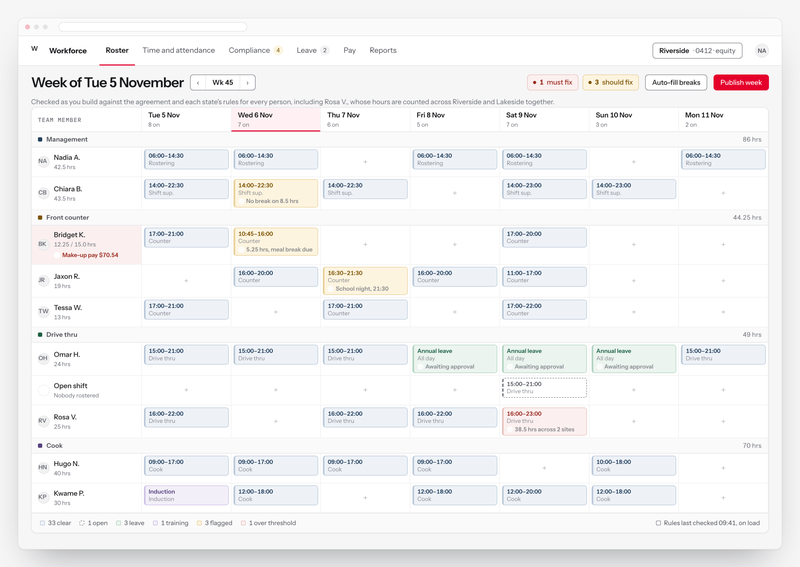 Preview: interface concept · September 2026
Workforce platform · 2024
Making workforce tools work for restaurant teams
Restaurant teams were working around the platform, while payroll, IT and operations had competing priorities for fixing it. I co-led a review to understand those problems and agree where change would make the greatest difference.
Co-led review · Eight priorities released by the vendor
Read the case study
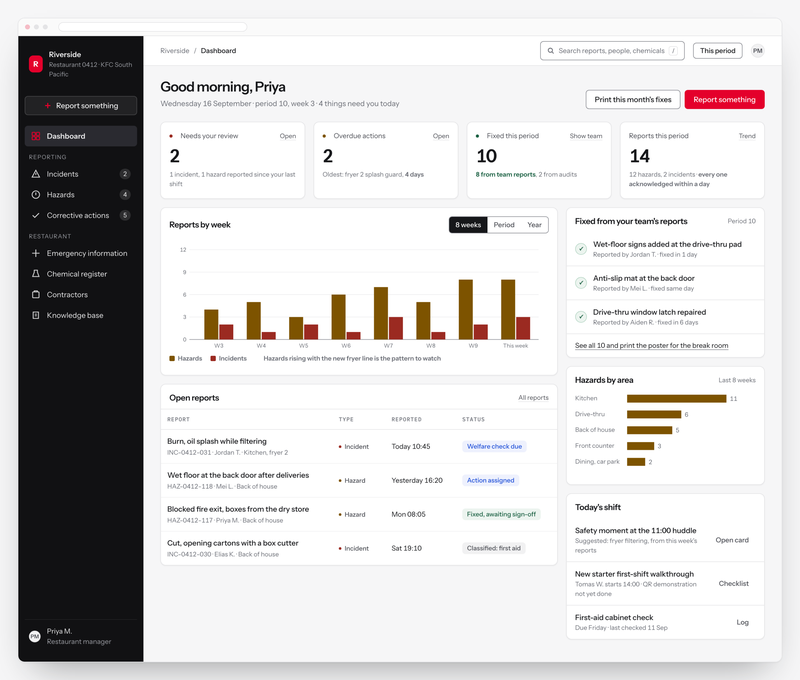 Preview: interface concept · September 2026
Safety and compliance reporting · 2025
Understanding what stops people reporting safety issues
Fewer reports did not necessarily mean a safer restaurant. The safety team needed to understand what was going unreported and why. I led research into the reporting experience to identify changes to the tools, support and everyday practices around it.
Led research and service design · Roadmap and prototypes delivered
Read the case study
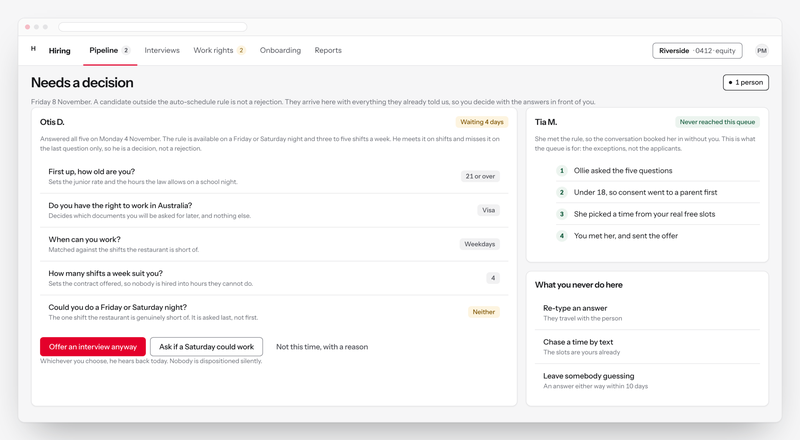 Preview: interface concept · September 2026
Hiring and onboarding · 2025
Making it easier to join the team
Growing the restaurant network meant understanding how well hiring and onboarding supported new starters and managers. I led research into the experience and designed a workflow to reduce repeated administration, improve communication and give people a clearer path to their first shift.
Led research and service design · Workflow specification delivered
Read the case study
Workforce platform review · July to December 2024
Transforming rostering, time and attendance across a billion-dollar restaurant business
Every restaurant ran on the same platform and nobody could agree what to fix first. 175 pain points, only 41 per cent of them a software problem. The platform needed a compliance layer people could work inside more than it needed features.
- Research
- More than 50 interviews, including an above-restaurant round with a franchisee, two area coaches and payroll; ten restaurant visits across franchise and equity sites; and 200 field survey responses. Co-led with one other designer; I ran the scoring workshop that produced the top ten.
- Delivered
- A four-lane blueprint across seven stages, four personas, two worked journeys and a scored top ten with criteria agreed before scoring, accepted as the standing prioritisation and reviewed half-yearly.
- Released
- Eight of the ten carried a named vendor release: three in November 2024, five across 2025. Some were already on the vendor calendar and were fast-tracked; others were negotiated. Ten further vendor releases followed in early 2026.
- Shown
- A nine-module interface concept designed in September 2026 from the findings. A release label on a module names functionality the vendor implemented, not the screen.
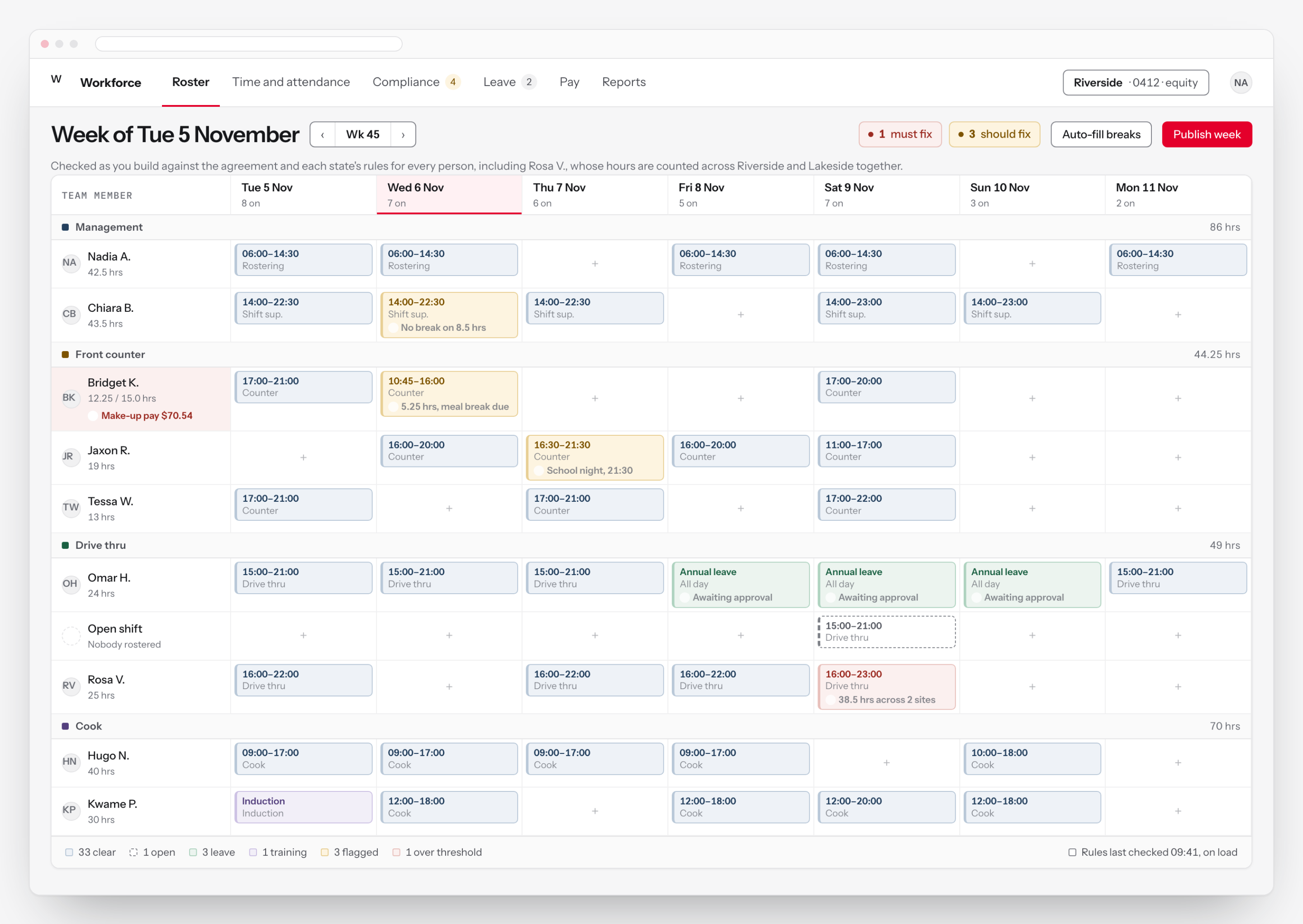
Nine modules of an interface concept on one design system, each screen answering a pain point from the research. Explore the concept, module by module, or read the scored top ten with its release record.
Safety and compliance reporting · October 2025 to January 2026
Transforming safety and compliance reporting across a restaurant network
The business assumed location explained why some restaurants reported more incidents than others, so I chose the sample to test that. In the sampled restaurants, manager practices explained the differences more consistently than location did, and the recommendations changed to match.
- Research
- More than 50 interviews, a 55-response survey, restaurant visits and two form walkthroughs across eight restaurants. The recorded interviews, the survey and the visit notes became 232 insight records, each tied to the stage of the service where it happens.
- Delivered
- December 2025, into the live reporting programme: findings report, a five-stage blueprint across 184 items, a three-phase roadmap and form prototypes, refined through a stakeholder validation session. Implementation sits with the platform, safety and training teams.
- Built
- The insight tool that holds the records and generates the blueprint and the report, with AI extraction behind a human review step. It replaced a board estimated at about 37 hours of manual placement across four rebuilds, assumptions shown.
- Shown
- A ten-module interface concept designed in September 2026 from the same findings, and a working prototype of the redesigned form.
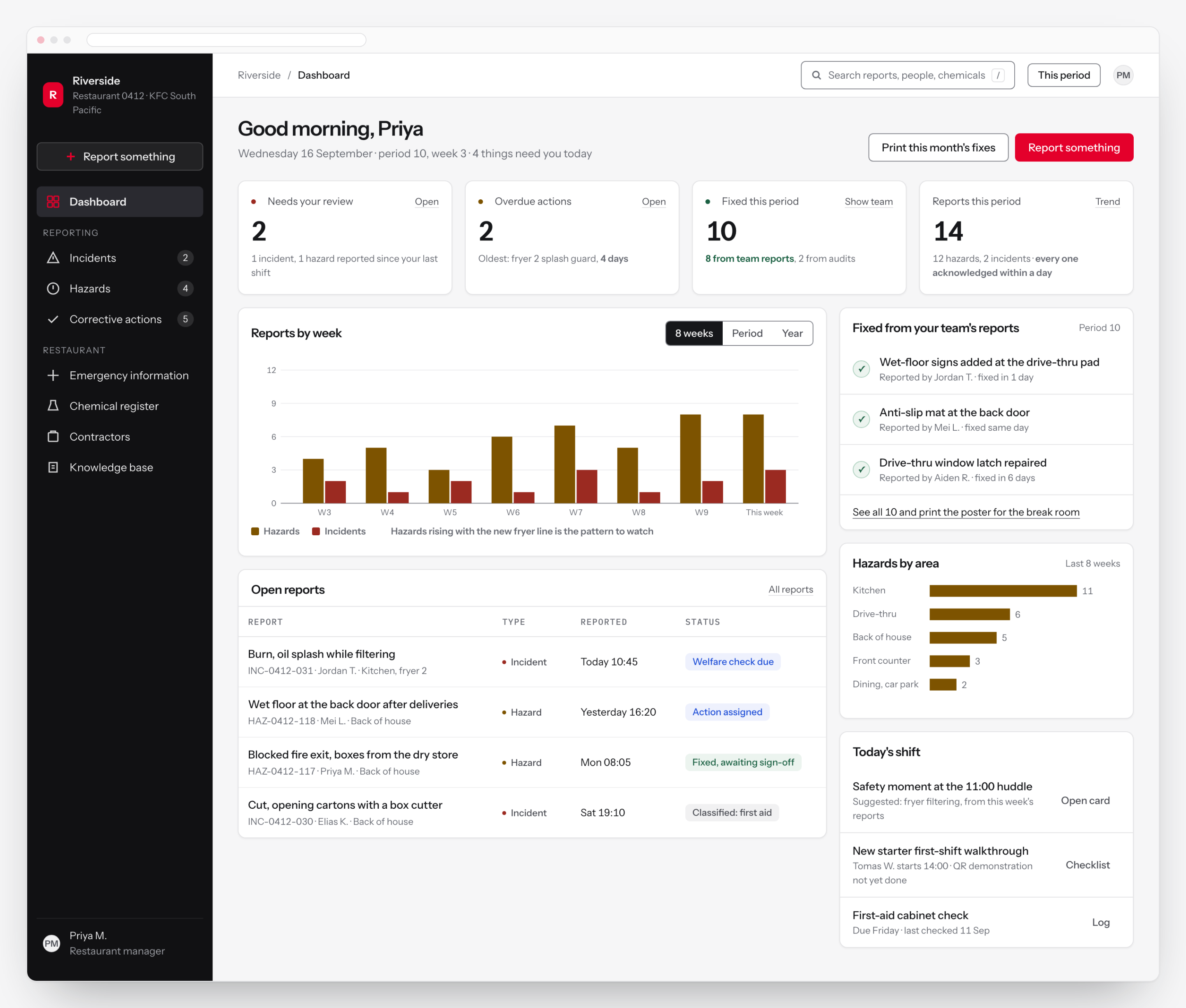
Ten modules on one design system, each screen annotated with the research finding that drove the decision. Explore the concept, module by module.
Hiring and onboarding · 2025
Redesigning hiring and onboarding for a restaurant network
The business had a labour-market theory: the jobs were hard to fill because the market was tight. The research pointed at its own process. Five of the seven moments that matter failed, and the wait for a first human touch ran from days to weeks.
- Research
- More than 50 interviews in and above restaurants, from crew and managers to the people function and franchisee leaders, mapped onto nine stages from finding the job to a first shift, with every failing moment named and given a verdict.
- Delivered
- A nine-stage blueprint, a manager competency framework, and a screening-to-interview workflow specification with human review lanes: automatic checks, no automatic rejection, and a designed commitment that every candidate gets an answer within ten days. Implementation sat with technology and the recruiting-platform vendor.
- Shown
- A ten-module interface concept designed in September 2026: seven screens for the candidate, three for the manager.
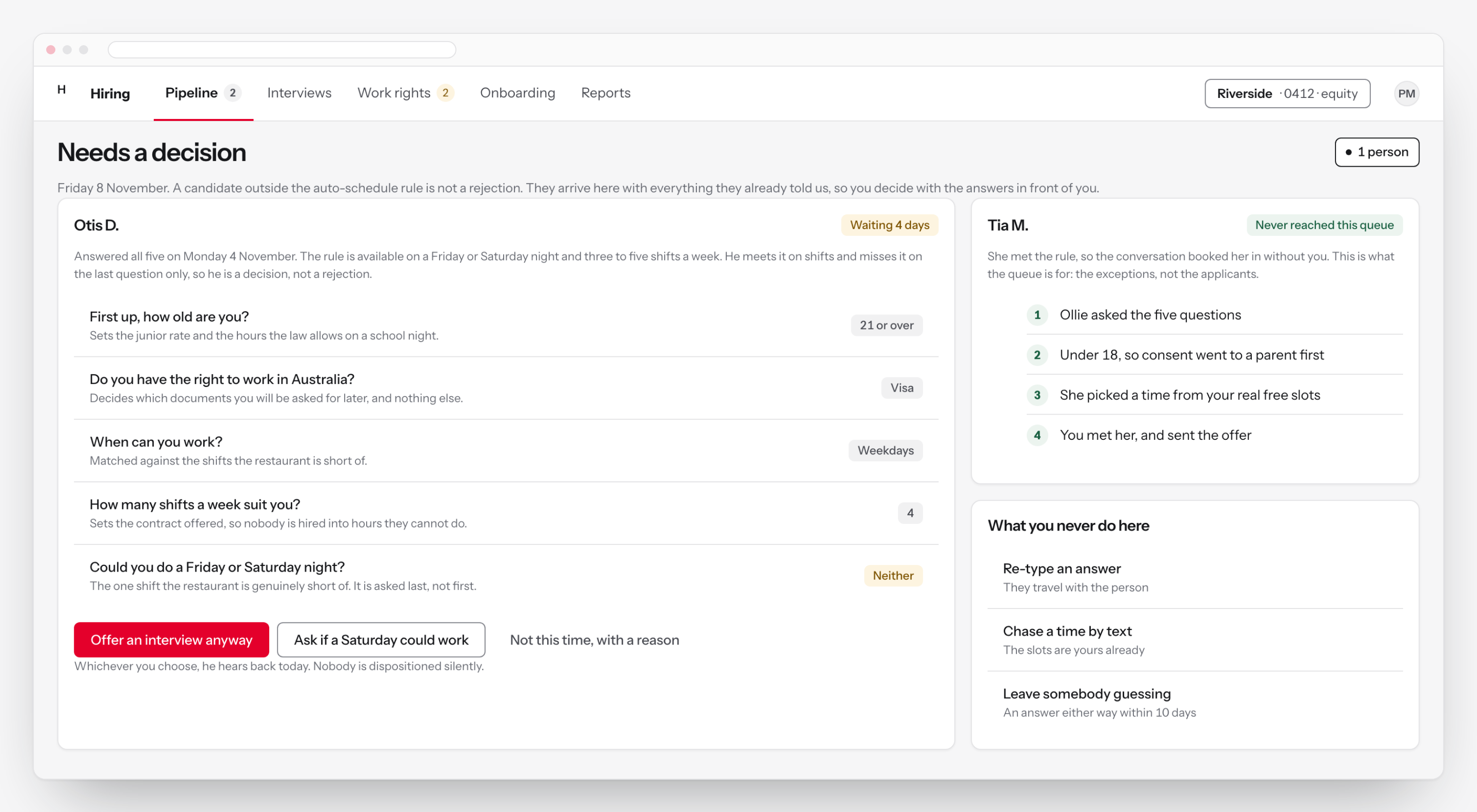
Ten modules on the same design system, seven of them met by a sixteen year old applying for a first job. Explore the concept, module by module.
Selected work
All seven projects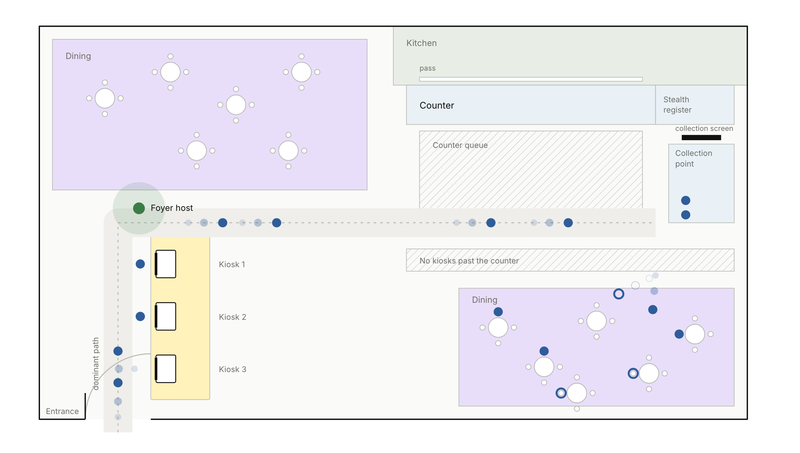 Self-service channel
Designing the human half of self-service ordering
A floor role, a placement standard and the training that came with them, for a channel that had reached about half the network while its operating model stood still. Standards published; enforcement through the audit sat with the standards programme.
Led the design work · standards delivered and published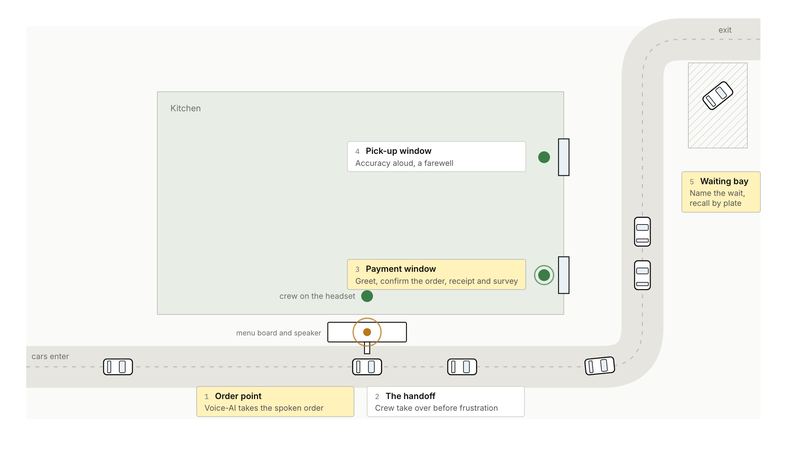 Drive-thru
Keeping the human moment in an AI-run drive-thru
A voice-AI order taker removed the one human moment the channel always guaranteed. Four touchpoints named and trained, a hospitality ritual written for each, and two sequenced pilots designed to test them.
Led the design work · two pilots run by the programme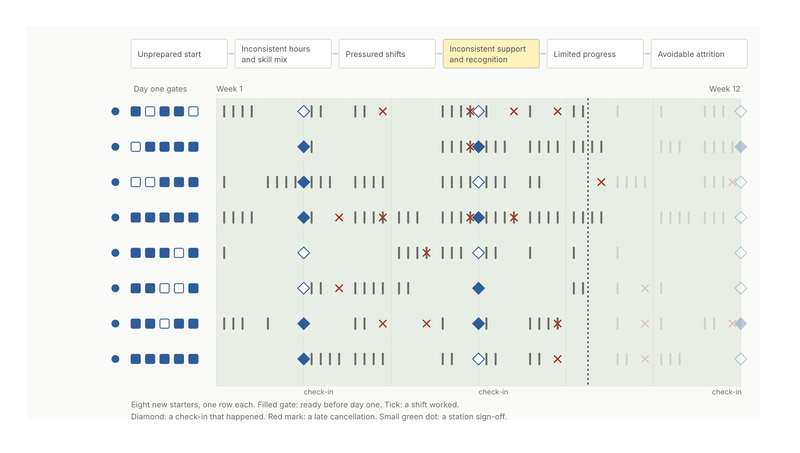 Employee experience
Deciding how to fix the first twelve weeks of a restaurant career
Three separate asks synthesised into one attrition chain, two blueprint options held in deliberate tension, and a decision brief a franchise governance forum settled in one meeting: the healthy-shift option first.
Led the design work · forum decision accepted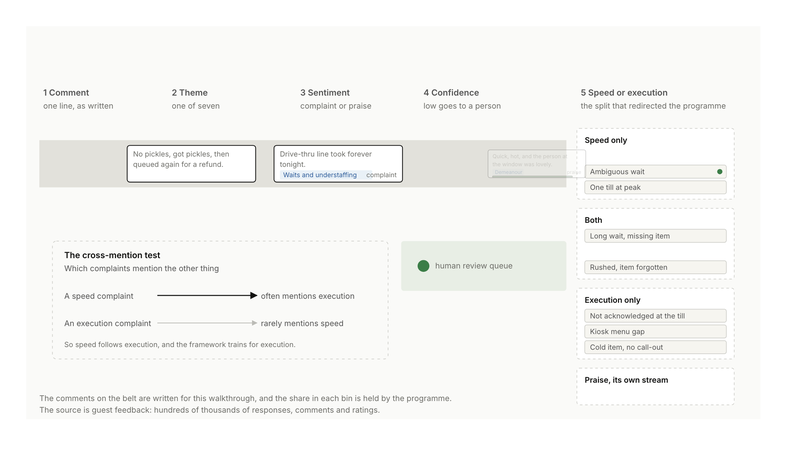 Service quality
Shifting a service-quality programme from speed to competence
Years of optimising one number while guests kept complaining. Read as one dataset, the complaints were about execution. The decomposition showed it, and the observation instrument and recognition ladder put it on the floor.
Led the design work · trial run by the programmeWhat I do
Service design, enterprise UX and applied AI
Research that reaches a decision
More than 150 interviews across the safety, workforce and hiring studies, and visits to 60 restaurants across all the work. Each study is designed so its sample can answer the question. In the safety work I chose restaurants to test whether location explained reporting differences. In the sampled restaurants the manager's routine explained them more consistently, and that changed what we recommended.
Service blueprints and the workshops around them
Multi-lane blueprints that show what the worker, the manager, the back office and the system each do at every step, and workshops where stakeholders argue about the map instead of each other.
Prioritisation people accept
Turning a long list of pain points into a ranked list with the evidence attached and the criteria agreed first, so a vendor negotiation or a roadmap conversation starts from the same page.
Applied AI, with the gates described
Four things, in the order they were built.
- DailyAI across research synthesis, coding and writing, with the prompt kept alongside its output.
- BuiltAn internal tool that extracts and classifies insights from transcripts, with schema validation, git checkpoints and every record reviewed against its source before it counts.
- GatedA critic that runs as a separate process with a one-use token, so the thing that drafts is never the thing that approves.
- DesignedConcept screens and a design system built from the safety, workforce and hiring research: 29 modules and more than 40 screens, with a contrast script and a lint gate that fail the build.
Library
The book and the public tooling behind it, on running service design with AI agents, sit in the Library. Personal projects, kept separate from the employment work above.